
The National Health Council estimates autoimmune diseases affect 50 million Americans, and even that’s likely an undercount. Yet conventional medicine still treats each condition in isolation: a different specialist, a different prescription, and rarely any conversation about what’s actually driving it all.
When the root cause goes unaddressed, the immune system doesn’t settle. Symptoms get managed, but the dysfunction keeps going, and for most people, so does the frustration. This is where autoimmune functional medicine takes a different approach. It looks upstream: at gut health, chronic infections, toxic burden, hormones, and stress, to understand why the immune system turned on itself in the first place. Hence, whether you’re a patient searching for real answers or a practitioner ready to go deeper, this guide covers it all!
Key Takeaways
|
What Is Actually Happening Inside the Body When Autoimmunity Takes Hold
Conditions such as allergies, infections, or immunodeficiency all involve the immune system reacting to something external. Autoimmunity is different because the perceived threat is the body itself! This is because the immune system fails to recognize the tissues of its host and begins to attack them. This failure manifests in different ways depending on the part of the body that it affects. It may be Hashimoto’s disease, targeting the thyroid gland, or lupus, affecting the whole body, or multiple sclerosis, attacking the nervous system, but their underlying cause is one!
As per NIH research, globally, both autoimmunity and autoimmune diseases are dramatically increasing, largely driven by environmental exposures. Thus, it is important to have a natural treatment approach under your belt to better target symptoms.
Why Symptom Management Is Not the Same as Treatment
Patients with autoimmune disease do take immunosuppressants to reduce the intensity of symptoms, but the relief is more often than not short-lived. Flare-ups due to gut imbalances, nutrient deficiencies, hormonal shifts, and environmental exposures all still remain. This is why patients with one autoimmune condition are far more likely to develop a second, making it essential to recognize the early warning signs that often go unrecognized for years.
Standard labs often focus solely on symptom management, thereby ignoring the right questions that might lead to the root cause. But fret not, because Dr. Bilstrom’s root-cause framework was built around changing precisely that!
The Three Root Causes Driving Autoimmune Conditions
Gut Health, Leaky Gut, and the Microbiome
The gut is where autoimmunity often begins, and where recovery usually has to start, too. When the permeability of the intestinal lining is compromised, toxins, antigens, and bacteria can pass into the bloodstream, and in individuals with a genetic predisposition, this can trigger the initiation and development of autoimmune disease, according to research published in Frontiers in Immunology.
The most common culprits damaging that lining are:
- Gluten and heavily processed foods
- Chronic stress and elevated cortisol, including how fasting interacts with the gut and cortisol
- Gut dysbiosis (an imbalance in the microbial community that keeps immune activation running in the background)
Restoring microbiome balance isn’t optional in autoimmune recovery; it’s foundational. From there, understanding how to reduce gut inflammation is one of the most practical next steps you can take!
Nutrient Deficiencies, Vitamin D, and Immune Function
In autoimmune disease, the immune system isn’t just overactive; it’s often under-resourced. Vitamin D is one of the clearest examples: not just a supplement, but a direct regulator of immune tolerance, and almost never tested properly in a standard panel. Low levels have been consistently linked to heightened autoimmune activity, yet they remain one of the most routinely overlooked findings.
The same pattern shows up across several other nutrients:
- Zinc and magnesium: Both are critical for immune cell function and keeping inflammatory signaling in check, and deficiencies in either can actively worsen autoimmune flares.
- Methylated B vitamins: Which support epigenetic repair at the cellular level, including what methylated B vitamins actually do in the context of immune regulation.
- TMG: Which plays a specific and often overlooked role in that same process, understanding the role TMG plays in supporting methylation matters before reaching for any supplement.
Epigenetics, Environmental Toxins, and Hidden Infections
Genes load the gun, but in reality, it is the environment that pulls the trigger. This pillar covers the triggers that accumulate quietly over the years:
- Endocrine-disrupting chemicals and heavy metals: Found in everyday products, altering immune gene expression without obvious symptoms.
- Hidden infections: Epstein-Barr virus and Lyme disease, in particular, are consistently found in autoimmune patients who never connected them to their diagnosis.
- Epigenetic changes: Modifications to how immune genes are expressed that can persist across years, and in some cases, pass to the next generation.
The connection between hidden infections and autoimmune disease is one of the most under-investigated areas in conventional medicine, and one of the most clinically significant as well!
Hormones, Cortisol, and the Stress–Autoimmune Connection
Cortisol: When the Stress Response Becomes the Problem
Cortisol is not your enemy; chronic cortisol is. When the HPA axis stays activated under chronic stress, it leads to glucocorticoid resistance, shifting the immune response toward a pro-inflammatory state, as said in the International Journal of Molecular Sciences, the same state that drives autoimmune flares. In practice, this shows up as:
- Intestinal permeability that stays elevated and keeps feeding immune activation
- Flares that seem to come out of nowhere but track closely with stress periods
- Recovery that stalls despite doing everything else right is often tied back to how cortisol affects your health
This is also why intervention tools can’t be applied in a blanket way. From there, it also shapes how fasting needs to be approached carefully to avoid making things worse.
Why Women Carry a Disproportionate Autoimmune Burden
Approximately 78% of all autoimmune patients are women, according to Frontiers in Endocrinology, and estrogen is a central reason why. Estrogen amplifies immune activity, which offers protection during reproductive years but becomes a liability when levels shift sharply. The highest-risk windows that point towards the early signs of low thyroid function include:
- Puberty: When estrogen surges for the first time.
- Pregnancy and postpartum: When hormonal shifts are rapid and dramatic.
- Perimenopause and menopause: When declining estrogen destabilizes immune tolerance.
Thyroid autoimmunity, particularly Hashimoto’s, tracks closely with these transitions because the thyroid is especially sensitive to hormonal fluctuation. Thus, understanding hormonal imbalance and its connection to autoimmune symptoms helps explain why the same woman can be fine at one life stage and symptomatic at the next.
How Do The Mitochondria, Circadian Rhythm, and Cellular Energy Tie in With Autoimmune Disease?
When the Body’s Power Supply Breaks Down
Mitochondria do more than generate energy; in immune cells, they directly regulate inflammatory signaling. When mitochondrial function declines, the downstream effects are hard to miss:
- Fatigue that does not resolve with rest
- Inflammation that becomes harder to switch off
- Oxidative stress that feeds the same immune dysregulation driving the disease
This is not a wellness concept. Optimizing mitochondrial function is a clinical target in autoimmune recovery, and one that standard care almost never addresses.
Circadian Rhythm: The Immune Clock Nobody Talks About
Every cell in the body runs on an internal 24-hour clock, regulating when to repair, when to fight inflammation, and when to stand down. Immune cells follow the same schedule, which means disrupting it does not just affect sleep; it directly affects how the immune system functions.
Common disruptors include:
- Shift work and irregular sleep schedules
- Chronic artificial light exposure at night
- Poor sleep quality and inconsistent sleep timing
The consequences are measurable: inflammatory markers rise, immune regulation weakens, and autoimmune risk climbs. Circadian syndrome sits at the intersection of sleep science and immunology, and it is one of the most consistently overlooked drivers of chronic immune dysfunction in autoimmune patients.
Autoimmune Conditions, Symptoms, and the Root-Cause Approach
Every condition below shares the same underlying immune dysfunction, expressed differently, in different tissues, in different people:
| Condition | What It Is | What Drives It | What Functional Medicine Does Differently |
|---|---|---|---|
| Hashimoto’s Thyroiditis | Immune attack on the thyroid — often active for years before being diagnosed. | Gut dysbiosis, hormonal shifts, chronic stress, and nutrient deficiencies | Addresses the gut-thyroid axis and hormonal imbalances driving the attack |
| Lupus | Systemic immune attack affecting multiple organs simultaneously | Unresolved gut permeability, environmental triggers, and ANA progression | Dr. Bilstrom’s Nuclearitis Protocol targets positive ANA before it progresses to a full diagnosis |
| Rheumatoid Arthritis | Progressive immune-driven joint destruction | Gut dysbiosis, food triggers, and chronic inflammation left unaddressed | Fasting and elimination protocols that reduce the inflammatory load |
| Multiple Sclerosis | Immune attack on the myelin sheath protecting nerve fibers | Gut-brain axis dysfunction, dysbiosis, and hidden infections | Investigating neurological autoimmunity through the gut: what conventional neurology rarely explores |
| PANDAS | Immune attack on brain tissue triggered by streptococcal infection — primarily in children | Gut-brain axis disruption and unresolved infection | Treating the immune trigger, not just the neurological or behavioral symptoms |
| Celiac Disease | A full autoimmune attack on the intestinal lining is triggered by gluten | Gluten exposure accelerates systemic immune dysregulation | Strict gluten-free protocol combined with gut repair — not dietary management alone |
| Sjögren’s Syndrome | Immune attack on salivary and lacrimal glands — frequently overlapping with lupus and RA | Gut dysbiosis and nutrient deficiencies are consistent root findings | Advanced functional testing that identifies what rheumatology workups miss |
| Type 1 Diabetes | Autoimmune destruction of insulin-producing beta cells in the pancreas | Gut microbiome disruption influences beta cell health long before diagnosis | Early microbiome intervention — one of the most underutilized approaches in metabolic autoimmunity |
| IBD and Crohn’s | Localized autoimmune process driving systemic inflammation well beyond the gut | Intestinal permeability and microbiome disruption at the root | Microbiome restoration and anti-inflammatory nutrition to reduce flare frequency |
| Psoriasis and Psoriatic Arthritis | Systemic immune condition expressed on the skin — progressing to joint damage in psoriatic arthritis | Same gut inflammation and immune dysregulation are driving every condition on this list | Addressing gut health and inflammatory load — not just the surface symptoms |
What Life Feels Like When You’re Undiagnosed vs. What Recovery Looks Like with Functional Medicine
Before: Undiagnosed autoimmune disease often feels like a quiet unraveling, chronic fatigue, joint pain, brain fog, gut issues, and unpredictable flares disrupt work, relationships, and identity. Patients cycle through appointments without answers, symptoms dismissed or mislabeled, while inflammation quietly progresses.
After: Under Functional Medicine, especially in the care model of Dr. David Bilstrom, recovery focuses on root causes, gut health, toxins, infections, and immune balance. Through personalized plans, testing, and ongoing support, patients often regain energy, clarity, and stability, shifting from surviving symptoms to actively rebuilding long-term health.
From Graves’ Struggle to Restored Balance: Kortney Olson’s Recovery Story: Case StudyAfter four years battling Graves’ disease, Kortney Olson struggled with fatigue, anxiety, and unresolved symptoms despite anti-thyroid medications that failed to help. Seeking answers, she turned to Dr. David Bilstrom, who used a Functional Medicine approach to uncover the root causes driving her condition. Through personalized treatment, targeted nutrition, and immune-focused care, her symptoms gradually improved. She regained energy, balance, and control of her health, demonstrating how addressing underlying triggers can transform the course of autoimmune disease. |
Functional Medicine Testing: Finding What Conventional Labs Miss
What Gets Tested and Why It Matters
A standard autoimmune workup checks thyroid-stimulating hormone (TSH), a basic metabolic panel, and maybe antinuclear antibodies (ANA). What it skips:
- Comprehensive stool testing: What bacteria are living in the gut, whether there is overgrowth, inflammation, or permeability driving immune activation.
- Micronutrient panels: Actual cellular levels of vitamin D, zinc, magnesium, and B vitamins, not just whether they fall within a broad normal range.
- Full thyroid panels with antibodies: Which can catch Hashimoto’s years before TSH ever moves.
- Autoantibody panels: Which show where the immune system is headed, not just where it already is.
If you have been told everything looks fine, but you still don’t feel well, the problem is rarely you; it’s what wasn’t tested. A closer look at these autoimmune symptoms often reveals exactly what the standard panel was never designed to find!
From Test Results to a Real Protocol
In functional autoimmune medicine, test results do not just confirm a diagnosis; they build a roadmap. As the body responds, the approach adjusts, which is exactly what personalized autoimmune care does. Let’s look at the specific interventions at each point:
- Gut dysbiosis → microbiome restoration
- Low nutrients → targeted supplementation
- Hormonal imbalance → natural rebalancing strategies
- Rising autoantibodies → root-cause intervention before progression
The protocol moves with the patient, which is what makes Dr. Bilstrom’s concierge program stand apart!
Nutrition, Anti-Inflammatory Diet, and Supplements For Autoimmune Disease
What you eat every day is either helping your immune system calm down or keeping it activated:
Where Nutrition Change Begins
- Gluten and dairy are the first to go for almost every autoimmune patient — not because of classic food intolerance, but because of how directly they damage gut permeability and drive immune activation
- Elimination protocols then identify individual triggers beyond those two foods that may be quietly fueling flares without an obvious connection
- Practical ways to reduce gut inflammation and elimination approaches specifically for RA are two of the most useful starting points
- The fasting mimicking diet supports immune cell renewal by clearing out old, damaged immune cells and making room for healthier ones — but works best whencortisol is carefully accounted for
Supplements: Grade and Quality Matter
Lifestyle Pillars That Affect Immunity
Sleep: The Most Underrated Immune Tool
Sleep deprivation has been associated with alterations of innate and adaptive immune parameters, leading to a chronic inflammatory state and increased risk for autoimmune and neurodegenerative diseases, according to research in Communications Biology. Poor sleep actively shifts immune cell activity in ways that drive the same inflammation that autoimmune patients are trying to resolve.
Movement: Type and Intensity Matter
| Type | Effect on Autoimmunity |
| Walking, yoga, swimming | Lowers inflammatory markers without triggering flares |
| High-intensity exercise | Can spike cortisol and worsen immune dysregulation |
| Mind-body practices | Directly changes immune gene expression |
A mind-body approach to autoimmune healing covers how stress reduction translates directly into immune outcomes, and circadian rhythm’s connection to immune regulation explains why sleep is treated as a clinical variable, not a lifestyle suggestion.
What Accumulates and Why It Matters

Simple steps that help: Switch to glass food storage, filter drinking water, choose fragrance-free personal care products, and support liver detoxification with milk thistle, glutathione, and B vitamins. Hidden infections and autoimmune disease cover what gets missed most often!
How to Access Root-Cause Autoimmune Disease Treatment
Telehealth
Finding doctors who specialize in autoimmune disorders nearby should not limit access to good care. Dr. Bilstrom’s virtual appointments follow 2025 American Medical Association (AMA) telemedicine standards (CPT codes 98000–98016) and are fully HIPAA compliant. Let’s learn how telehealth autoimmune functional medicine specialist appointments are structured and what to expect from the first consultation!
What an appointment includes:
- Full health history review; not a rushed intake.
- Advanced functional medicine testing was ordered and interpreted remotely.
- Natural treatment protocols are built around individual test results.
- Ongoing follow-up as the protocol evolves.
Come prepared with:
- A symptom and diagnosis timeline.
- Any existing lab work, even if the results were “normal.”
- A current medications and supplements list.
Personalized autoimmune care across the patient journey walks through each stage in detail.
The Concierge Program: How It Differs From Standard Care
| Standard Autoimmune Care | Concierge Program |
| Brief appointments | Extended, unhurried consultations |
| Symptom suppression | Root-cause natural treatment |
| Separate referrals | One integrated framework |
| Static protocols | Protocols that evolve with the patient |
Most autoimmune disease doctors refer out for nutrition and coaching support. In Dr. Bilstrom’s concierge medicine packages, health coaching and nutritional counseling are embedded directly into care because what a patient eats, how they manage stress, and how they implement lifestyle changes between appointments are not separate from treatment!
How to get started:
- Add your name to the patient interest list to be notified when availability opens
- Review program options to find the right level of access for your situation
- Come prepared with existing records, labs, and a clear picture of your health timeline
The entire process is designed to feel like a partnership, not a referral chain. Reclaim your health through the concierge autoimmune program for full program details!
Education for Autoimmune-Related Healthcare Practitioners
The gap in autoimmune disease treatment is not just a patient problem; it is a training problem. Most practitioners finish medical school without the tools to investigate autoimmunity at the root cause. Dr. Bilstrom’s practitioner programs exist to close that gap!
Training Programs for Autoimmune Specialists
- Free Practitioner Masterclass: An introduction to root-cause autoimmune disease treatment for NPs, MDs, and allied health professionals, covering the foundational framework that conventional training skips. Join the autoimmune training for healthcare practitioners to get started.
- Functional Medicine Nurse Practitioner (NP) Program: Specific training for nurse practitioners ready to specialize in autoimmune disorders at the root cause. Explore the Functional Medicine NP Program to see what it covers.
- Autoimmune PARADIGM Certification: A structured program aligned with IFMcertification standards, giving practitioners the clinical tools to deliver natural treatments for autoimmune disease in their own practice. Learn about the Autoimmune PARADIGM certification and how it is structured!
Books, Resources, and Continuing Education
For practitioners and patients who want to go further:
- The Nurse Practitioners’ Guide to Autoimmune Medicine: The clinical book covering the full root-cause framework for reversing and preventing autoimmunity, endorsed by Dr. Mark Hyman.
- Free 7-Day Email Course: An accessible entry point into root-cause principles for anyone new to functional autoimmune medicine.
On top of this, Dr. Bilstrom’s articles and press coverage keep practitioners current with evolving autoimmune science, and the regularly updated autoimmune disease blog covers practical clinical insights as they develop.
Regulations, Standards, and Why Evidence-Based Autoimmune Functional Medicine Is Trustworthy
What Makes a Qualified Autoimmune Disease Specialist
Not all doctors who specialize in autoimmune disorders are trained equally. Quadruple board certification, in functional medicine, integrative medicine, physical medicine, and acupuncture, means a practitioner has met rigorous standards across multiple disciplines, not just one. Other certifications are:
- IFM and IBFMC certification sets the clinical and ethical standards that qualified functional medicine autoimmune specialists are held to
- AMA informed consent requirements mean every patient receives a clear explanation of their protocol, the evidence behind it, and what to expect, before treatment begins
- Telehealth licensing ensures virtual autoimmune disease treatment meets the same legal and clinical standards as in-person care
Full credentials and clinical background cover what each qualification means in practice.
FDA, FTC, and Supplement Safety Standards
Natural treatments for autoimmune disease often include supplements, and the regulatory framework around them matters.
- DSHEA (21 CFR 101.93) governs how supplement structure/function claims can be made and what disclaimers are required.
- Federal Trade Commission (FTC) Health Products Compliance Guidance (2022) requires that health claims be truthful, not misleading, and substantiated by evidence.
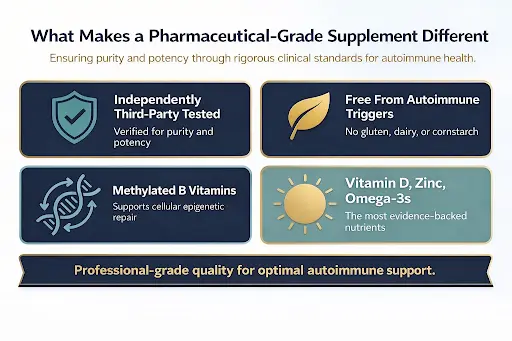
- Pharmaceutical-grade supplements are independently third-party tested for purity and potency, a meaningfully higher standard than most retail options
The supplement standard for autoimmune support explains what to look for and why grade and sourcing are non-negotiable in autoimmune disease treatment.
Conclusion
Knowing the root cause is only the beginning. The real work is building a protocol around it: one that accounts for your gut, your hormones, your history, and your biology specifically. Most autoimmune patients do not need more information; they need someone willing to act on it. Dr. Bilstrom, quadruple board-certified and former Medical Director of the International Autoimmune Institute, has spent his career doing exactly that, for thousands of patients worldwide.
So, if you are ready to find out what is actually driving your autoimmune condition, book a consultation today!