According to data from the Centers for Disease Control and Prevention (CDC):
- More than one in ten U.S. adults experiences frequent anxiety or worry, and
- Nearly one in five has been diagnosed with an anxiety disorder at some point in their lives.
These widespread stress-related conditions are closely linked with repeated activation of cortisol, commonly known as the body’s “stress hormone.” While cortisol is necessary for short-term adaptation to stress, persistent psychological pressure can keep this hormone activated far beyond healthy limits. When this happens, it can lead to a range of health effects, which we explain in this blog. You’ll also learn what causes it to rise, how the body responds, and practical ways to improve cortisol balance. Let’s begin with the first section!
Cortisol Effects On Health: Quick Insight
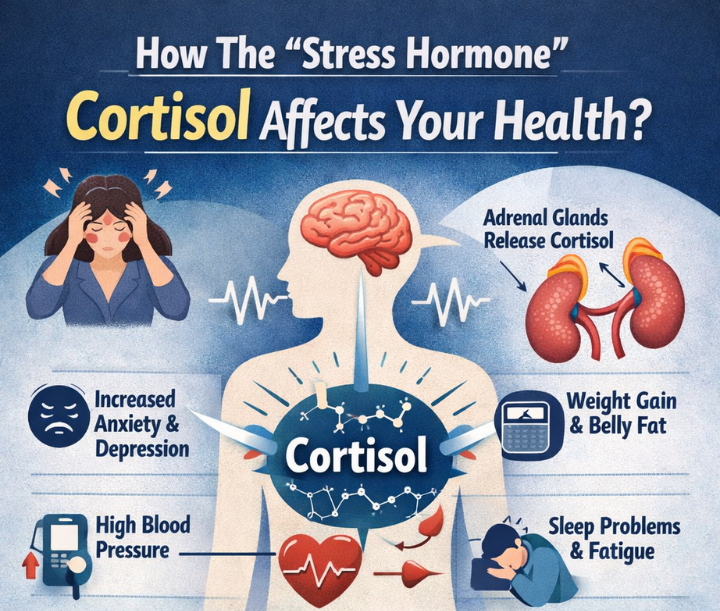
Chronic cortisol elevation disrupts metabolic control, immune activity, cardiovascular function, sleep signaling, digestion, and emotional regulation. Prolonged stress exposure promotes abdominal fat storage, glucose instability, weakened immunity, impaired memory processing, and reduced reproductive hormone activity. The article explains how psychological, medical, and lifestyle stressors maintain cortisol overactivation and highlights consistent sleep routines, moderate exercise, balanced nutrition, and stress-management strategies as key factors for restoring healthier hormonal regulation.
What Does Cortisol Do?
Cortisol is a glucocorticoid hormone synthesized by the adrenal cortex that regulates stress responses, glucose metabolism, blood pressure, immune modulation, circadian rhythm, and neurocognitive function through hypothalamic–pituitary–adrenal (HPA) axis signaling pathways. Together, these actions help maintain energy balance and overall physiological homeostasis.
What Causes Cortisol Levels To Be High?
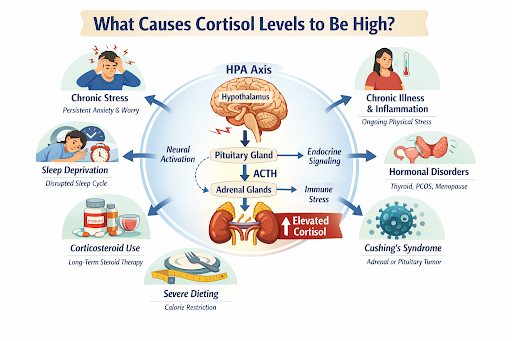
Here are the main factors responsible for cortisol elevation and the development of high cortisol symptoms in the body:
- Chronic psychological stress continuously activates the hypothalamic-pituitary-adrenal axis, keeping cortisol elevated far beyond normal short-term stress responses.
- Sleep deprivation or circadian rhythm disruption prevents cortisol from following its natural daily cycle, causing sustained hormonal imbalance.
- Cushing’s syndrome results from pathological overproduction of cortisol due to pituitary, adrenal, or ectopic hormone abnormalities.
|
- Long-term corticosteroid medication useartificially increases cortisol activity in the body, suppressing normal hormonal feedback mechanisms.
- Severe calorie restriction or prolonged fasting triggers a survival response, raising cortisol to preserve glucose and essential bodily functions.
- Chronic inflammation or long-term illness places constant physiological stress on the body, stimulating ongoing cortisol release to regulate immune activity.
- Major hormonal dysregulation, such as thyroid disorders, PCOS, or menopause, interferes with cortisol balance and stress regulation systems.
What Happens If Your Cortisol Levels Are Always High?
1. Abdominal Fat Accumulation Becomes More Likely
Since cortisol causes fat storage cells to activate around the abdominal area, energy storage occurs mainly as visceral fat instead of being stored as muscles or glycogen.
2. The Nervous System Remains in a Constant Alert State
Instead of switching off after stress passes, elevated cortisol keeps neural pathways overstimulated, creating exhaustion without physical relaxation.
3. Night-Time Hormone Signals Get Disrupted
When cortisol fails to decline in the evening, melatonin release is delayed, breaking the biological timing required for deep, restorative sleep.
4. Immune Defenses Gradually Lose Strength
Prolonged cortisol exposure suppresses white blood cell activity, reducing the body’s ability to respond effectively to pathogens and tissue damage.
5. Blood Vessels Experience Continuous Pressure
While increased cortisol is clearly a stress response, continuing levels will cause vasoconstriction, which effectively raises the resistance in arteries.
6. Emotional Regulation Becomes Chemically Imbalanced
Cortisol imbalances alter serotonin and dopamine levels, which are associated with increased emotional reactions to situations, while making a person less resilient to the stresses of daily life.
7. Reproductive Hormone Production Gets Deprioritized
Cortisol synthesis suppresses estrogen, progesterone, and testosterone synthesis under a perceived survival threat, which in turn may affect fertility and sexual health.
8. Digestive Efficiency Declines Over Time
Stress-driven cortisol diverts blood flow away from the gastrointestinal tract, impairs nutrient absorption, and affects gut repair mechanisms.
9. Brain Structure and Memory Processing Are Affected
Chronic exposure to cortisol may affect hippocampal functions and reduce the brain’s capabilities for memory storage, leading to a reduced sharpness of cognitive faculties.
Tips For Controlling Cortisol And Stress
Understanding how to lower cortisol levelsstarts with simple, consistent lifestyle and behavioral changes. Explore the key strategies below to get started:
- Practice slow, deep breathing for five minutes every morning and before stressful situations.
- Go to bed and wake up at the same time every day, including weekends.
- Another best treatment for high cortisol is to do moderate physical activity such as brisk walking, cycling, or light strength training most days.
- Eat regular, balanced meals containing protein, fiber, and healthy fats throughout the day.
- Spend meaningful time with supportive friends or family several times each week.
- Use cognitive-behavioral techniques or journaling to reframe negative thoughts and daily stressors.
- If you prefer professional guidance, you may consult Dr. David Bilstrom and explore the best supplement to reduce cortisol, such as L-Theanine – Cortisol Assist – 120 vegetable capsules.
Wrapping Up!
Now that you have a complete knowledge of cortisol, it becomes clear that this hormone is essential for survival but damaging when chronically elevated. The important point is not to fear cortisol, but to work with it by restoring balance rather than staying in constant survival mode!
Frequently Asked Questions
Several testing methods are available, including morning blood draws, late-night saliva samples, 24-hour urine collection, and dried blood spot kits used at home or in clinics.
Normal cortisol follows a daily rhythm: early-morning blood levels are typically about 5–25 µg/dL, while late-evening levels usually fall below 5 µg/dL, depending on laboratory reference ranges.
Yes. Cortisol imbalance can disrupt hair growth cycles, impair collagen synthesis, thin the skin, delay wound healing, and accelerate visible aging through chronic inflammation and oxidative cellular stress.
Recovery time varies, but improvement often begins within a few weeks after sustained stress reduction, while full hormonal rhythm stabilization may require several months, depending on sleep quality, health status, and lifestyle consistency
Yes. Persistently elevated stress hormone, cortisol, can delay wound healing, suppress immune repair activity, increase inflammation, and slow tissue regeneration after surgery or physical injury, prolonging overall recovery time.