So, are you an aspiring FMNP and wondering how to become a functional medicine nurse practitioner? Well, for that, you need to have advanced nursing education, clinical licensure, and specialized functional medicine training. Compared to conventional practice, this role is slightly different. It emphasises personalised diagnostics, integrative treatment planning, and strategies that address the root causes of chronic and complex conditions.
It is important to navigate all the prerequisites, evaluate certification programs, understand state regulations, and learn how to apply functional medicine principles in clinical practice. This guide is gonna provide you with a comprehensive roadmap for the same, so that you can confidently enter this emerging and highly impactful field.
A Brief Overview of the Functional Medicine NP Path
Becoming a functional medicine nurse practitioner requires a structured progression of education, licensure, and specialization. The journey begins with earning a BSN and obtaining an active RN license, followed by completing a graduate-level NP program such as an MSN or DNP. After passing national NP certification and securing state licensure, nurses gain the legal authority to practice. The final stage involves formal functional medicine training, credentialing, and clinical integration, allowing NPs to apply a systems-based, root-cause approach within their legal scope of practice.
Ready to treat root causes confidently? Join our free autoimmune masterclass and elevate your practice.
Basic Education Needed to become a functional medicine nurse practitioner
1. Obtain a Bachelor of Science in Nursing (BSN) Degree
The first and most important prerequisite to becoming a functional medicine nurse practitioner is to obtain a Bachelor of Science in Nursing (BSN) degree from an accredited college. The reason? Well, this level provides the needed education in anatomy, physiology, pathophysiology, pharmacology, evidence-based practice, and other crucial areas in which all advanced practicing registered nurses, as well as functional medicine practitioners, should be well-versed.
2. Obtain and Maintain an Active RN License
After finishing a BSN, applicants must go through the NCLEX-RN licensing examination to acquire their license as an RN. Having an active, unrestricted RN license is a prerequisite for joining a nursing practice program. Clinical work experience as an RN, especially in primary care, family medicine, internal medicine, or chronic disease management, improves one’s preparedness for practice as a functional medicine professional using a systems perspective.
3. Complete a Graduate-Level Nurse Practitioner Program
Nurses must also earn a Master of Science in Nursing (MSN) or a Doctor of Nursing Practice (DNP) degree in a legitimate nurse practitioner specialty. Functional medicine aligns most closely with Family Nurse Practitioner (FNP), Adult-Gerontology Primary Care NP, Women’s Health NP, and Psychiatric-Mental Health NP tracks due to their emphasis on longitudinal care and complex conditions. This is because the specialties have a focus that underlines long-term care for people with complexities. This will equip the nurse with the needed competencies to practice the principles of functional medicine.
4. Obtain NP National Certification And State Licensure
Graduates must pass a national certification exam through bodies such as the AANP or ANCC and obtain state licensure to practice as an NP. Passing this step ensures that an NP has legal authority to diagnose, treat, and prescribe, constituting the legal basis upon which functional medical training can be implemented. State practice laws ensure that an NP has licensure in each state.

Training and Courses to become a functional medicine nurse practitioner
Once a nurse practitioner (NP) has obtained licensure and national certification, the next step toward becoming a Functional Medicine Nurse Practitioner (FMNP) is specialized post-licensure training in functional medicine. This training ensures NPs can implement root-cause, systems-based care safely and effectively within their clinical scope.
Autoimmune Care Fundamentals
Applying Functional Medicine in Clinical Practice (AFMCP)
The AFMCP course is the foundational program for licensed clinicians seeking competency in functional medicine. It is ACCME-accredited and provides CME/CE credits, covering:
- Systems biology and chronic disease mechanisms
- Root-cause assessment and individualized care planning
- Evidence-based functional medicine frameworks
Advanced Practice Modules (APMs)
After AFMCP, nurse practitioners may complete Advanced Practice Modules, which are going to deepen their clinical expertise in specific areas such as:
- Immune system function and autoimmune conditions
- Gastrointestinal health and microbiome assessment
- Hormone balance and cardiometabolic disease
Functional Medicine Certification (FMCP-M)
Completion of AFMCP and APMs prepares NPs for the Functional Medicine Certified Professional – Medical™ (FMCP-M) credential. This certification requires:
- ≥100 hours of accredited functional medicine education
- Successful completion of a competency-based examination
Autoimmune PARADIGM: Specialized Functional Medicine Training
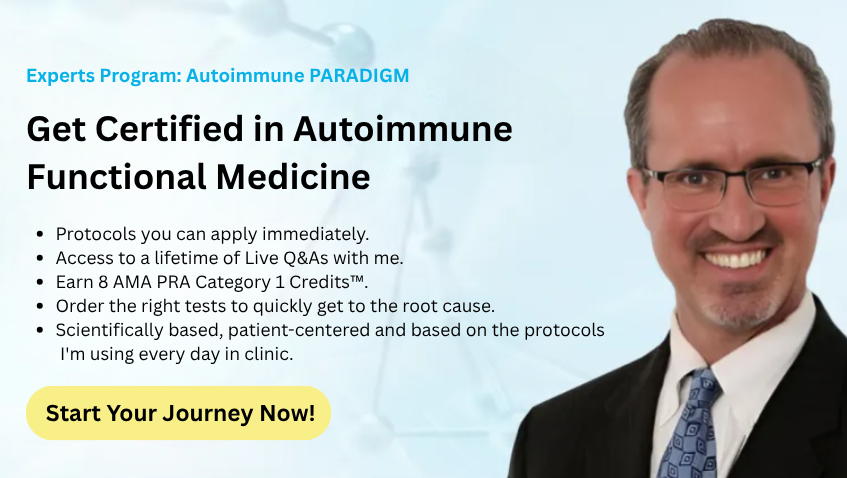
The Autoimmune PARADIGM program provides nurse practitioners with advanced functional medicine expertise in autoimmune care, offering 8 AMA PRA Category 1 CE credits™.
Here, the practitioners will learn how to assess autoimmune mechanisms, interpret lab results, and create personalized, root-cause-focused treatment plans. The program relies on evidence-based, case-driven modules to integrate functional medicine principles into practical patient care strategies.
After completion, you will be granted clinical competence, validating expertise in autoimmune functional medicine and equipping NPs to deliver comprehensive, individualized care for complex immune-related conditions.
Autoimmune PARADIGM by Dr. David Bilstromempowers nurse practitioners to move beyond symptom management and apply proven, root-cause functional medicine strategies in autoimmune care.
Join Autoimmune PARADIGM and master root-cause autoimmune care with confidence!
What Does a Functional Medicine Nurse Practitioner Do?
1. Full Patient Assessment:
FMNPs perform thorough medical history and lifestyle analyses and use advanced diagnostic procedures to diagnose factors that contribute to illnesses.
2. Personalized Treatment Planning :
They design treatment programs that incorporate healthy dietary changes, stress management techniques, exercise regimens, nutraceuticals, and conventional medical treatment.
3. Collaboration and Coordination:
These nurse practitioners usually work along with physicians, health coaches, nutritionists, and other professionals to provide coordinated and integrative patient care.
4. Patient Education and Empowerment:
They also provide patients with information on understanding their illnesses so that patients are fully involved in making health care decisions.
5. Monitoring and Adjustment:
FMNPs follow the progress of the patients, adjust their respective treatment plans as per their lab results, as well as outcomes, with an emphasis on preventive healthcare practices.
With all this in mind, FMNPs are positioned to make patient care better and to take up an integral practice in the rising field of integrative and functional medical practices.
Career Options After becoming a functional medicine nurse practitioner
1. Private or Group Practice
FMNPs can establish or join functional medicine clinics where they can provide personalized care focused on the root cause for patients with chronic conditions, autoimmune disorders, metabolic syndromes, and hormonal imbalances. Many of them work privately, offering specialized services such as bioidentical hormone replacement therapy, metabolic optimization, and IV nutrient therapy.
2. Integrative Health Centers
These days, hospitals, wellness centers, and multidisciplinary clinics have been increasingly incorporating functional medicine services. This has allowed FMNPs to work alongside physicians, dietitians, and health coaches in team-based care.
3. Telehealth and Remote Consultations
There has been a tremendous rise in telemedicine, which again has lead to an increase in the need for FMNPs. They can provide virtual functional medicine consultations, giving access to patients nationwide and allowing chronic disease management and lifestyle coaching remotely.
4. Education and Training
Experienced FMNPs can even opt to become clinical instructors, course facilitators, or mentors. They can teach medicine principles to nursing students, NP residents, or other healthcare professionals.
5. Research and Policy
Some FMNPs contribute to clinical research, outcomes studies, or integrative healthcare policy, helping advance evidence-based functional medicine practices.
Conclusion
If you are a nurse seeking to move beyond plain symptom management and play a more active, important role in long-term health outcomes, functional medicine offers a meaningful, forward-looking career path. And with the right preparation and education, FMNPs can deliver value to patients and the healthcare system as a whole.
Are you ready to go deeper in autoimmune care? Join our free masterclass with Dr. David Bilstrom, a board-certified MD and global educator, to learn how to treat root causes, not just symptoms.
It is time to gain practical, evidence-based tools to transform your autoimmune outcomes and elevate your functional medicine practice.
Frequently Asked Questions
It generally takes around 6-10 years. All these years include a BSN and RN experience, graduate education to NP, national certification, and post-licensure training in functional medicine.
Functional medicine nurse practitioners work for an average annual salary of $99,112. Salaries range from $92,996 to $105,616 annually.
The salaries for these practitioners usually depend on geographic location, years of experience, specialty focus, practice setting, volume of patients, and business ownership. Another important factor is the range of services offered.
It is a very bright outlook, supported by the Bureau of Labor Statistics projections. It shows a 40% growth in NP employment during 2023-2033.
To start a private practice as a functional medicine NP, obtain state licensure, secure liability insurance, complete functional medicine training, follow state scope laws, set up business operations, and establish patient care protocols.